Master Jellyfin playlists: manual creation, smart auto-updating playlists via plugins, sharing with users, M3U import, and music playlist management. Everything about playlists in one guide.
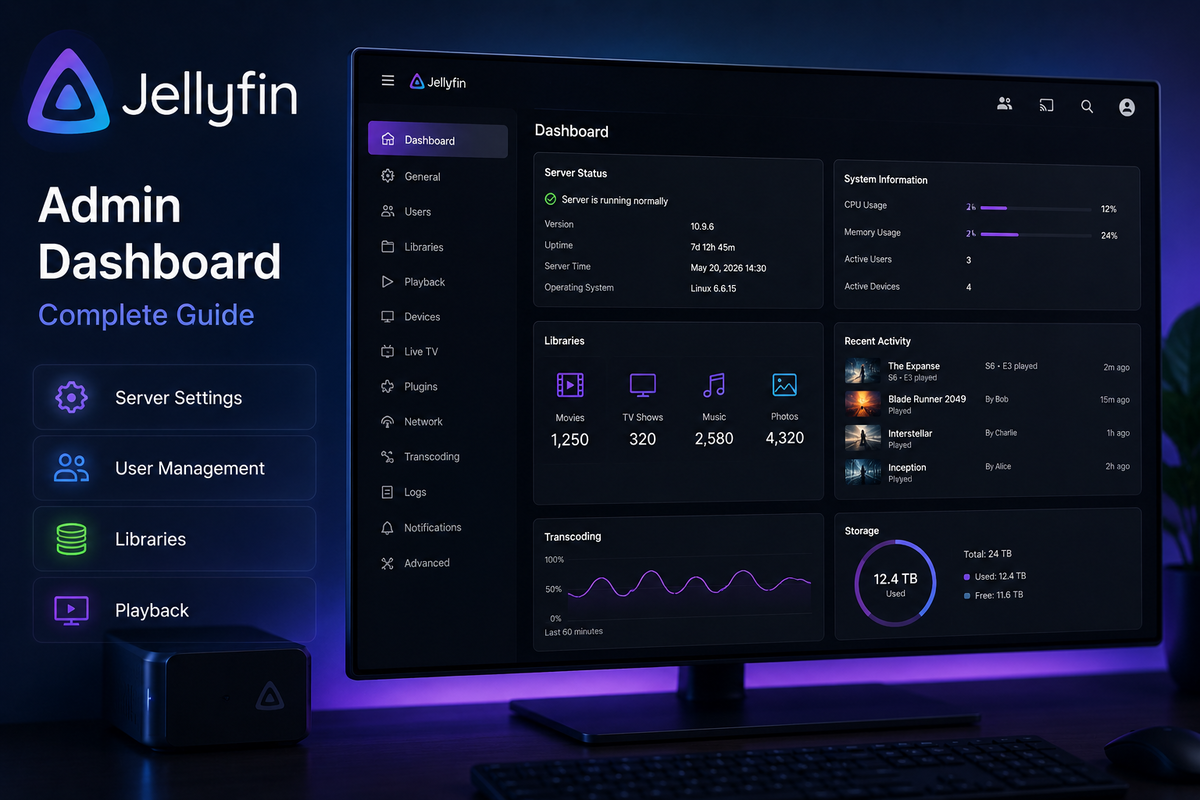
The Complete Jellyfin Dashboard Guide: Every Admin Setting Explained (2026)
The Jellyfin dashboard is where everything happens - users, libraries, plugins, transcoding, networking. This complete admin reference explains every section, which settings matter, and how to configure them for a real-world setup.
Jellyfin Accessibility Guide 2026: Subtitles, Audio Description, SDH, and Inclusive Media Serving
Make your Jellyfin server accessible to everyone: deaf and hard-of-hearing users (SDH subtitles, closed captions), blind and low-vision users (audio description tracks), users with motor disabilities (keyboard navigation, voice control), and non-native speakers (multi-language subtitles). Covers finding and adding accessibility tracks, configuring default subtitle behavior, and making the interface navigable for all users.
The Jellyfin Bandwidth Calculator: How Many Users Can Your Upload Speed Handle? (2026)
Your Jellyfin server is only as good as your internet upload speed for remote users. This practical guide provides exact bandwidth calculations for every streaming scenario: 1080p encodes, 4K remuxes, transcoded streams, and simultaneous users. Includes a simple formula to calculate your maximum concurrent remote streams, ISP upload speed recommendations, and strategies to serve more users with limited bandwidth.
Jellyfin Multi-Server Architecture 2026: Load Balancing, Failover, and Geo-Distribution
Running one Jellyfin server works for most users. But what happens when you have 20+ concurrent users, need geographic distribution for remote viewers, or require zero-downtime maintenance? This advanced guide covers multi-server Jellyfin architectures: shared storage with multiple instances behind a load balancer, active-passive failover, geo-distributed servers with WatchState sync, and the honest limitations of scaling Jellyfin beyond a single node.
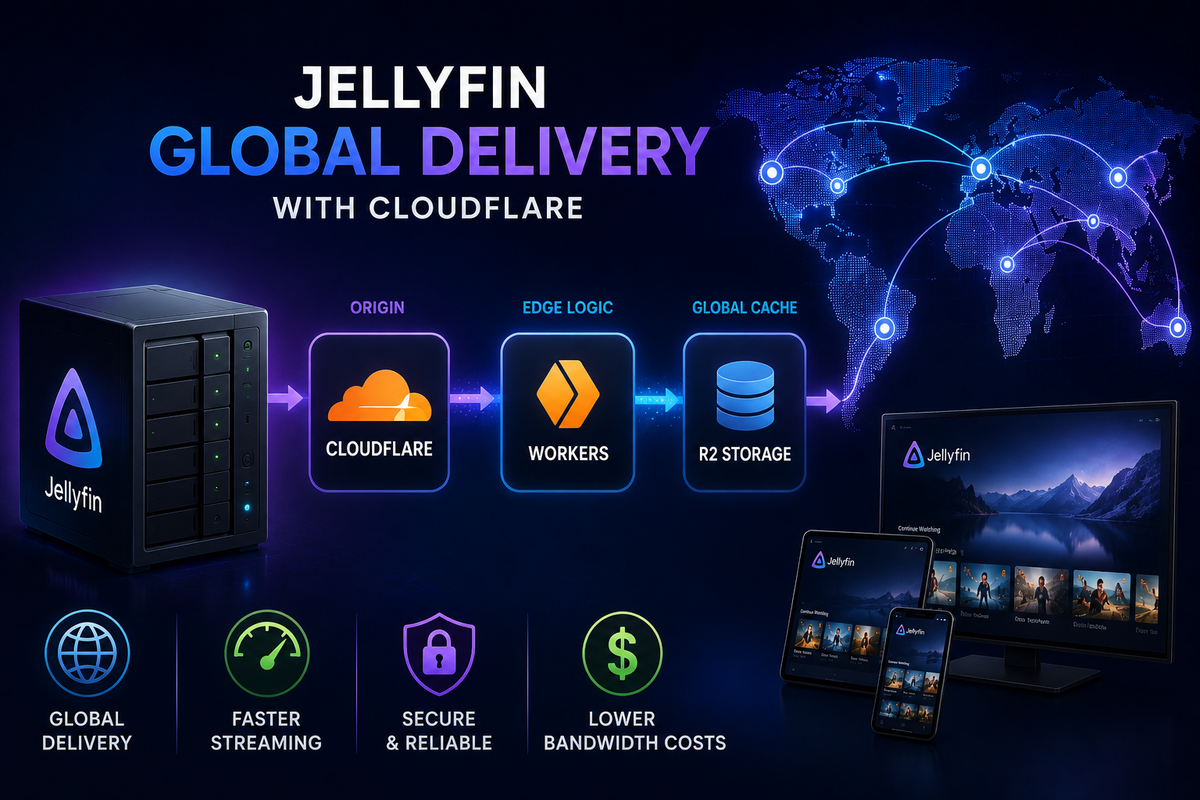
Building a Jellyfin CDN with Cloudflare R2 and Workers: Global Media Delivery (2026)
Serve your Jellyfin library to users worldwide with low latency using Cloudflare R2 for storage and Workers for edge logic. This advanced guide covers uploading media to R2, creating STRM files for Jellyfin, building a Worker that handles range requests and authentication, cost analysis vs traditional VPS hosting, and the honest limitations of this approach.
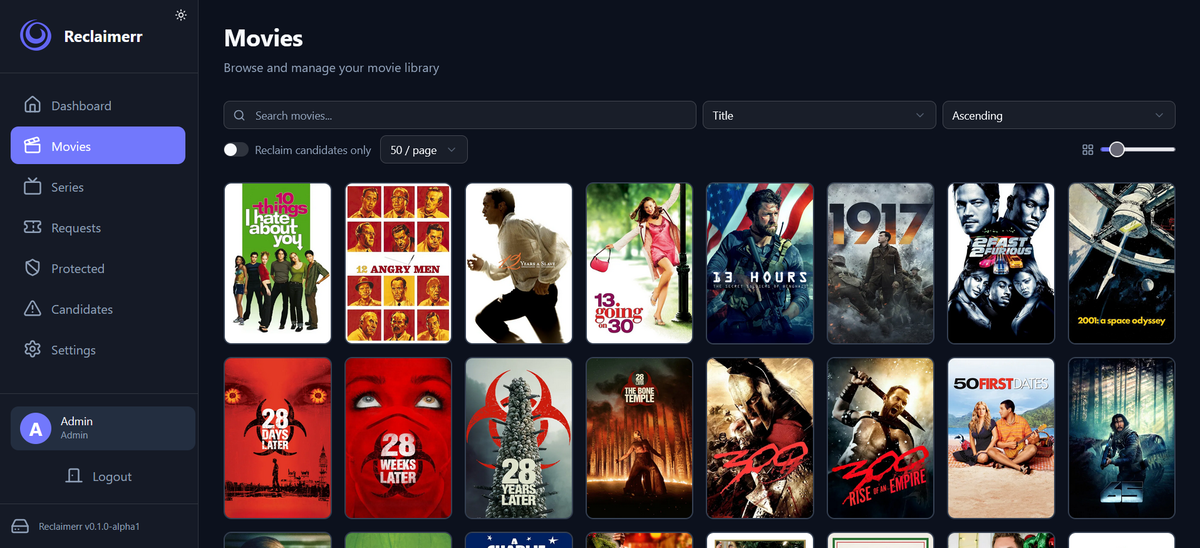
Reclaimerr: Automatically Reclaim Disk Space from Your Jellyfin, Plex, or Emby Library (2026)
Reclaimerr is a self-hosted application that helps you reclaim disk space by identifying unwatched and low-rated media in your library. It integrates with Jellyfin, Plex, and Emby (simultaneously if needed), supports Radarr and Sonarr for managed deletions, offers a protection system so users can save content from cleanup, and includes multi-user permissions with notification support via Apprise.
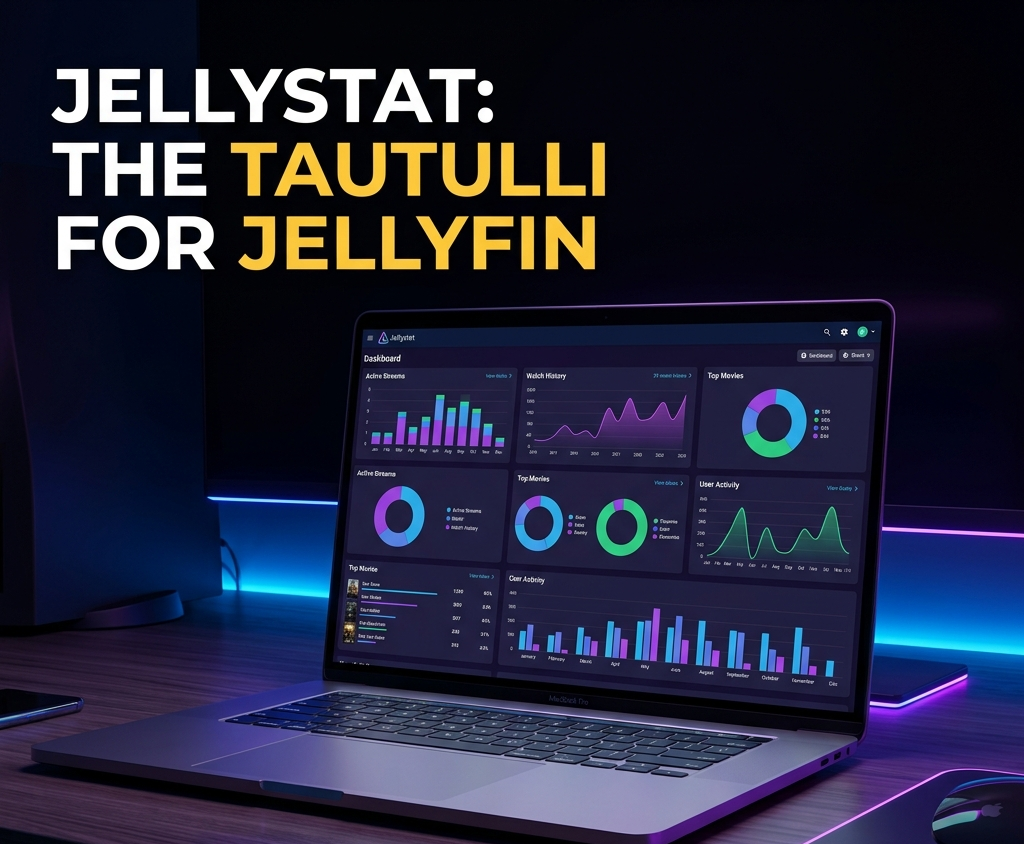
Jellystat: The Tautulli Alternative for Jellyfin , Setup, Features, and Dashboard Guide (2026)
Jellystat is the free, open-source statistics dashboard for Jellyfin. It gives you everything Tautulli gives Plex users: per-user watch history, most-played content, playback method breakdown, and a beautiful web dashboard. This guide covers Docker setup, API connection, and getting the most out of your data.
Monitor Jellyfin Server Uptime with Uptime Kuma: Setup, Alerts, and Dashboard (2026)
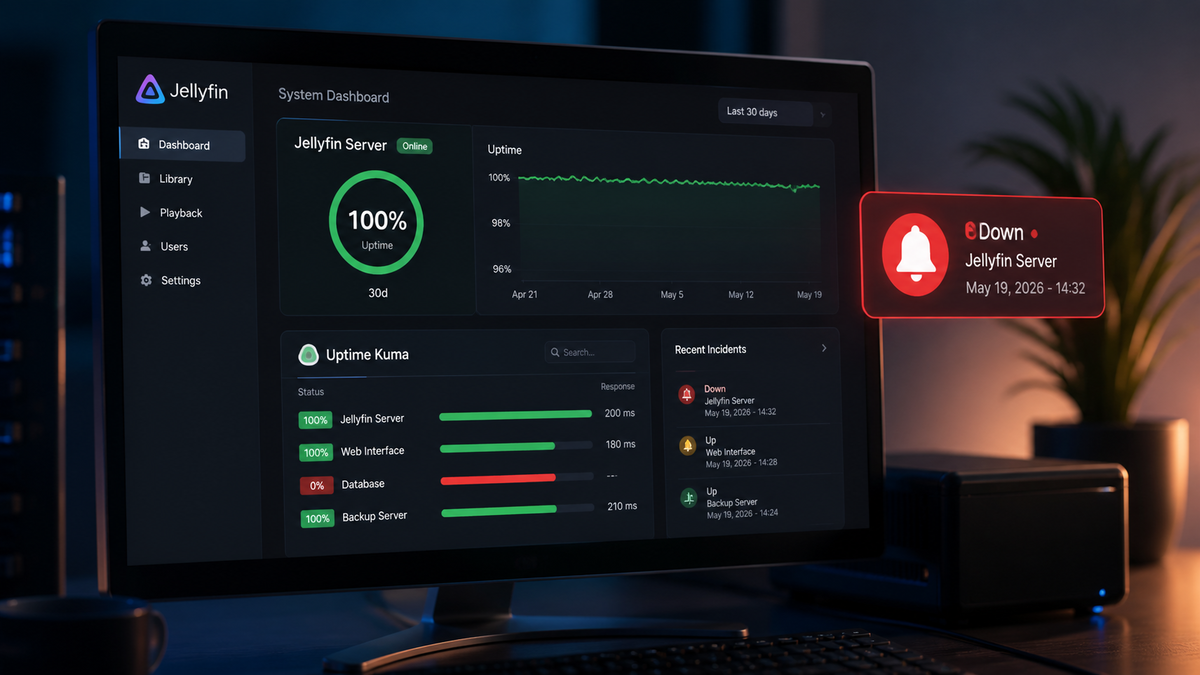
Uptime Kuma is the most popular self-hosted monitoring tool in 2026. This guide shows how to monitor your Jellyfin server health endpoint, set up instant alerts via Discord, Telegram, or Ntfy, and build a status page your users can check.