News & updates

RSS

Tips, updates, and guides from the JellyWatch team.

23 results for "performance"

Intel N100 & N150 Successor: What Comes Next for Jellyfin Mini PCs in 2026?
5 min read 263

Intel N100 & N150 Successor: What Comes Next for Jellyfin Mini PCs in 2026?

The Intel N100 dominated budget Jellyfin servers. Now the N150 and upcoming successors push performance further. Compare specs, transcoding benchmarks, and find out if it is time to upgrade your media server.
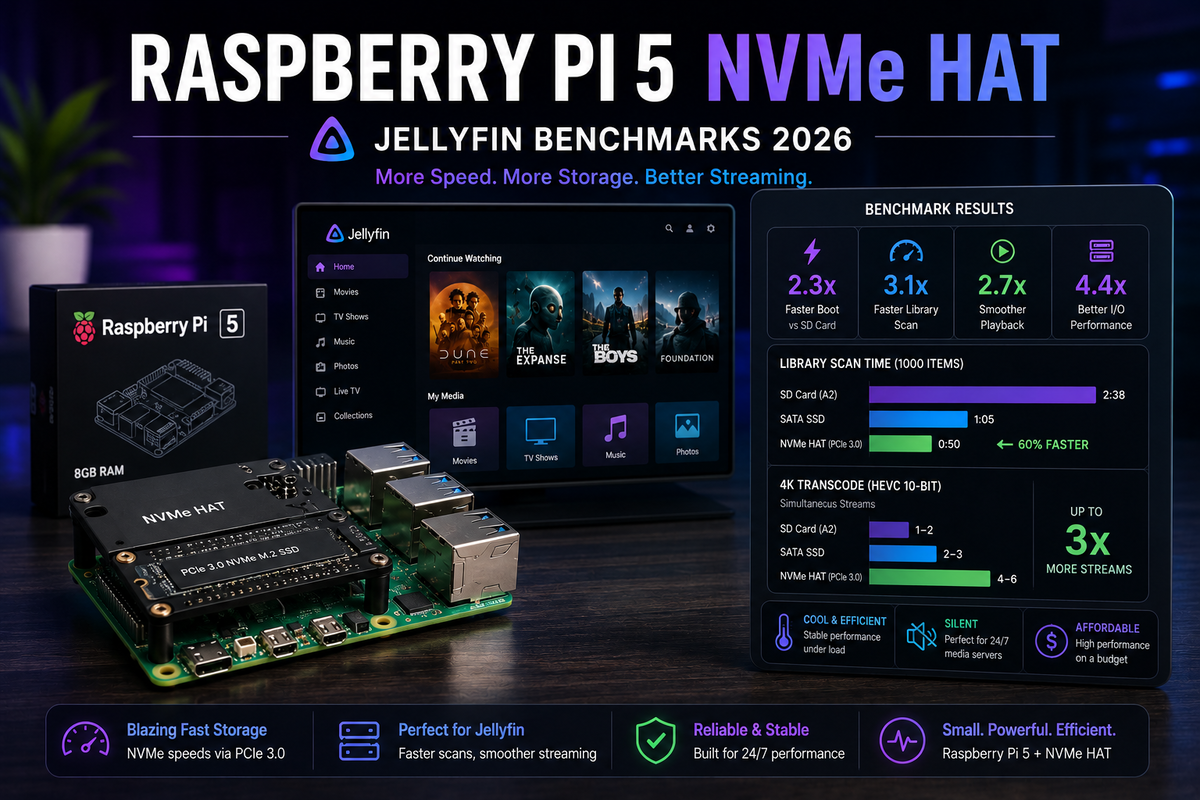

Raspberry Pi 5 + NVMe HAT for Jellyfin 2026: Real Performance Benchmarks and the N100 Comparison
8 min read 116

Raspberry Pi 5 + NVMe HAT for Jellyfin 2026: Real Performance Benchmarks and the N100 Comparison

The Raspberry Pi 5 with an NVMe HAT finally solves the Pi storage bottleneck. But does it make the Pi 5 a viable Jellyfin server in 2026? We benchmarked library scan speed, metadata loading, Direct Play performance, and compared it head-to-head against the Intel N100 mini PC. Includes NVMe HAT installation, Docker setup, and honest recommendations for when the Pi 5 is enough and when you should spend $50 more on an N100.

Breezyfin for LG webOS: The Alternative Jellyfin Client for LG Smart TVs (2026)
5 min read 3930

Breezyfin for LG webOS: The Alternative Jellyfin Client for LG Smart TVs (2026)

Breezyfin is a community-built Jellyfin client for LG webOS TVs that aims to improve performance over the official web-based app. Installation, features, and current status.

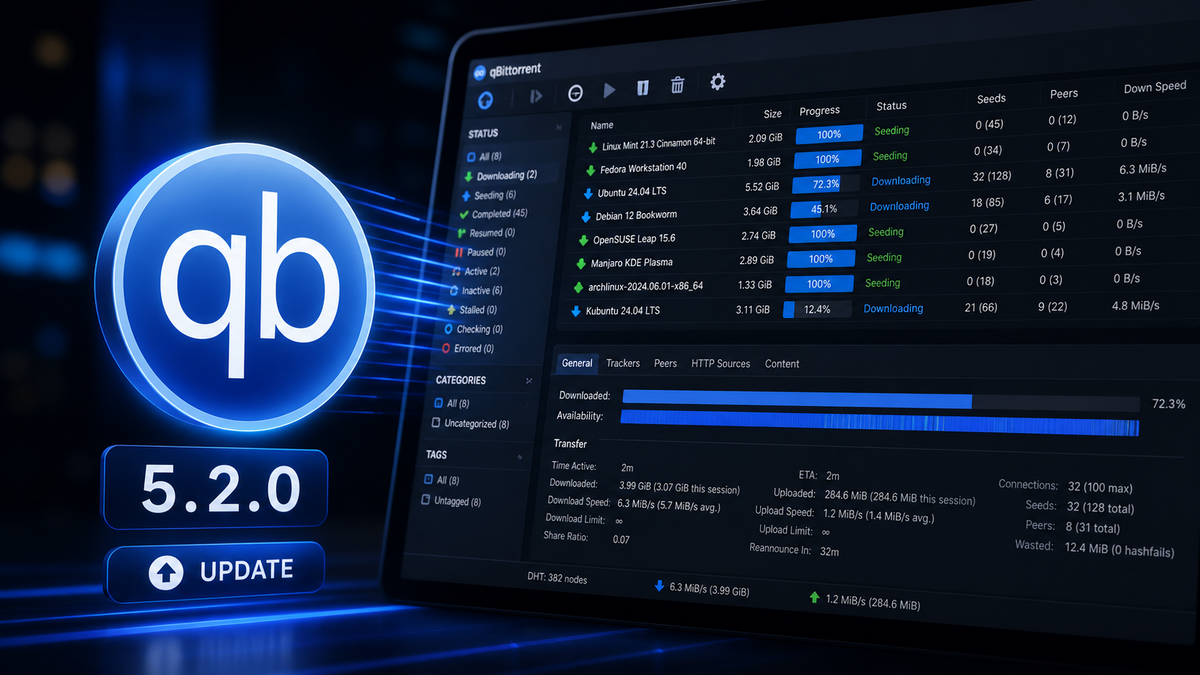
qBittorrent 5.2.0 Released: What's New and Why It Matters
8 min read 6381 1 3

qBittorrent 5.2.0 Released: What's New and Why It Matters

qBittorrent 5.2.0 is a major release with category-level share limits, WebUI performance improvements, async piece calculation, and a long list of crash fixes. Here is everything that changed and what Jellyfin admins running Radarr and Sonarr need to know before upgrading.

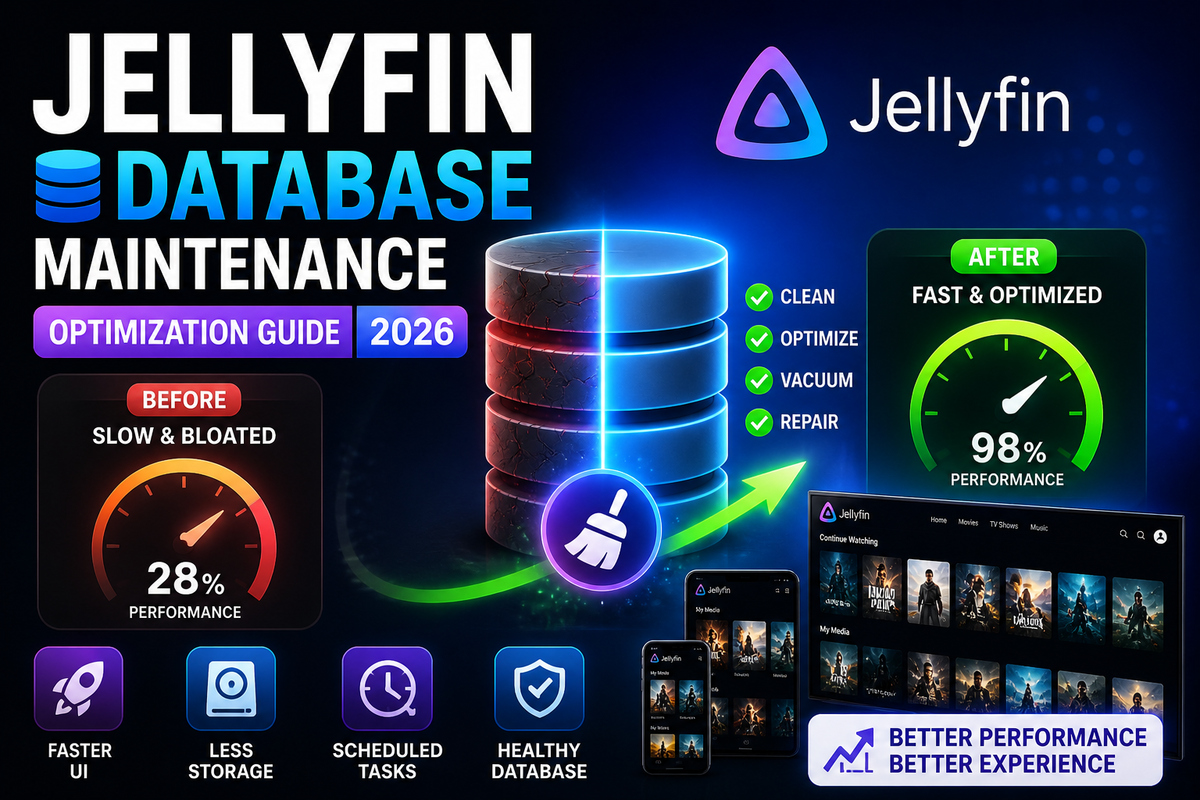
Jellyfin Database Maintenance Guide (2026): VACUUM, Repair, and Optimization After the EF Core Migration
8 min read 1847

Jellyfin Database Maintenance Guide (2026): VACUUM, Repair, and Optimization After the EF Core Migration

Jellyfin 10.11 moved everything to a single SQLite database managed by EF Core. Over time, this database grows, fragments, and slows down. This guide covers VACUUM, integrity checks, WAL management, activity log cleanup, and automated maintenance scripts to keep your server fast.

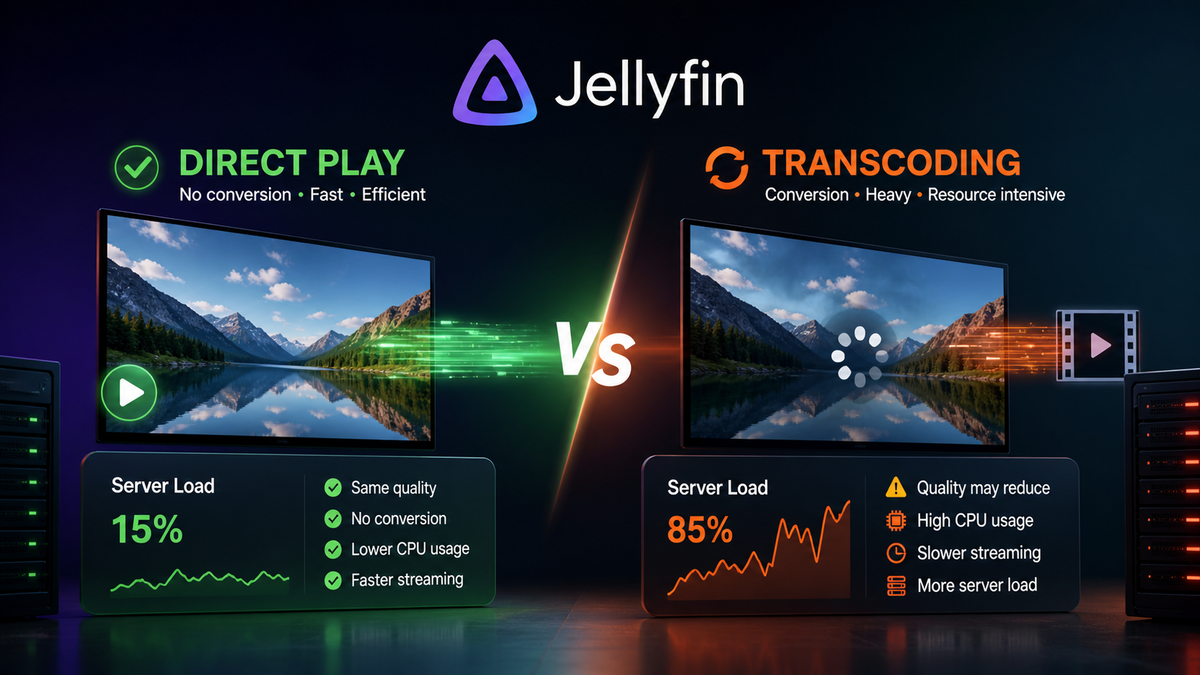
Jellyfin Direct Play vs Transcoding Explained: Why It Matters and How to Force Direct Play (2026)
9 min read 3037 2

Jellyfin Direct Play vs Transcoding Explained: Why It Matters and How to Force Direct Play (2026)

Direct Play uses zero CPU. Transcoding can max out your server. This guide explains every playback method in Jellyfin, why transcoding happens, how to identify it, and how to force Direct Play on every client for the best quality and lowest server load.

Best NAS for Jellyfin in 2026: Synology vs QNAP vs Asustor vs DIY (Buying Guide)
2 min read 1855

Best NAS for Jellyfin in 2026: Synology vs QNAP vs Asustor vs DIY (Buying Guide)

Which NAS should you buy for Jellyfin in 2026? This buying guide compares Synology, QNAP, Asustor, and DIY builds - focusing on hardware transcoding support, Docker compatibility, Intel vs AMD CPUs, and price-to-performance.

Jellyfin Scheduled Tasks: Stop Background CPU Spikes (Optimization Guide 2026)
2 min read 575

Jellyfin Scheduled Tasks: Stop Background CPU Spikes (Optimization Guide 2026)

Jellyfin runs dozens of background tasks that can spike CPU and cause buffering during playback. This guide explains every task, which to disable, how to reschedule heavy tasks (Trickplay, Intro Skipper, chapter extraction) to run overnight, and how to monitor their impact.

Fix Jellyfin Slow UI: Dashboard Lag, Library Loading Issues, and Metadata Browsing Speed (2026)
3 min read 1219

Fix Jellyfin Slow UI: Dashboard Lag, Library Loading Issues, and Metadata Browsing Speed (2026)

Jellyfin dashboard taking forever to load? Library browsing feels sluggish? This guide covers the real causes - slow metadata storage, EF Core 10.11 regressions, large library enumeration, plugin overhead, and database bloat - with proven fixes.