
The Ultimate Jellyfin Server Setup Guide (2026)
Building a high-performance Jellyfin server in 2026 is easier than ever - but building a stable, scalable, and professional-grade media server requires the right strategy.
This complete guide walks you through:
- Hardware selection
- Installation best practices
- Performance optimization
- Essential plugins
- 4K streaming setup
- Security configuration
- Ongoing monitoring and stability
Whether you run Jellyfin for family, friends, or a large private community, this guide will help you create a setup that feels like a premium streaming platform.
1. Choosing the Right Hardware in 2026
Your hardware determines everything: buffering, stream limits, and stability.
Recommended Minimum (Home Server)
| Component | Recommendation |
|---|---|
| CPU | 6 cores (Intel or AMD) |
| RAM | 16GB |
| Storage | SSD for system + HDD for media |
| Network | Gigabit Ethernet |
For Multiple 4K Streams
| Component | Recommendation |
|---|---|
| CPU | 8-12 cores |
| GPU | Intel Quick Sync or NVIDIA NVENC |
| RAM | 32GB |
| Storage | NVMe cache recommended |
Hardware acceleration is mandatory if you expect remote users.
2. Installing Jellyfin Properly
Docker (Recommended)
Why Docker?
- Easier updates
- Better isolation
- Cleaner backups
Basic deployment steps:
- Install Docker
- Create persistent volumes
- Map media folders
- Enable GPU passthrough
Always separate:
- /config
- /cache
- /media
This prevents corruption during updates.
3. Optimizing Performance (Critical Section)
Most buffering issues come from three causes:
- Transcoding overload
- Slow storage
- Network misconfiguration
Enable Hardware Acceleration
Dashboard → Playback → Transcoding
Select:
- Intel Quick Sync
- NVIDIA NVENC
- AMD VAAPI
Force Direct Play
Encourage users to:
- Use compatible clients
- Avoid unsupported codecs
Move Metadata to SSD
This dramatically improves UI responsiveness.
4. Essential Jellyfin Plugins (Professional Setup)
Plugins transform Jellyfin from basic server to premium experience.
Must-Have Plugins
| Category | Plugin | Why It Matters |
|---|---|---|
| Automation | Intro Skipper | Netflix-like experience |
| UX | Jellyscrub / Trickplay | Visual seeking thumbnails |
| Organization | TMDB Box Sets | Clean collections |
| Subtitles | OpenSubtitles.com | Automatic subtitles |
| Analytics | Playback Reporting | Usage insights |
| Visual Quality | Fanart.tv | Premium artwork |
Install only what you need. Too many plugins increase background load.
5. 4K Streaming Optimization
4K streaming is resource-intensive.
Best Practices
- Use H.265 encoding
- Avoid transcoding 4K remotely
- Limit maximum bitrate per user
- Ensure sufficient upload bandwidth
| Streams | Recommended Upload Speed |
|---|---|
| 1x 4K | 40 Mbps |
| 2x 4K | 80 Mbps |
| 4x 4K | 160 Mbps |
If bandwidth is limited, create optimized 1080p versions.
6. Security Best Practices
Never expose your server without protection.
Required Security Measures
- Reverse proxy (Nginx or Traefik)
- HTTPS with valid SSL certificate
- Strong admin password
- Disable unused plugins
- Regular updates
Avoid default port exposure without encryption.
7. Scaling Your Jellyfin Server
As your user base grows, so do risks:
- CPU overload
- Disk saturation
- Plugin conflicts
Scaling Strategies
| Issue | Solution |
|---|---|
| High CPU | Upgrade GPU acceleration |
| Slow browsing | Move metadata to NVMe |
| Crashes | Audit plugins |
| Disk bottleneck | RAID or SSD cache |
Proactive monitoring becomes essential at this stage.
8. Why Monitoring Is the Missing Piece
Most admins optimize once - then forget.
But over time:
- New plugins increase load
- Libraries grow
- More users stream simultaneously
- CPU spikes during intro scans
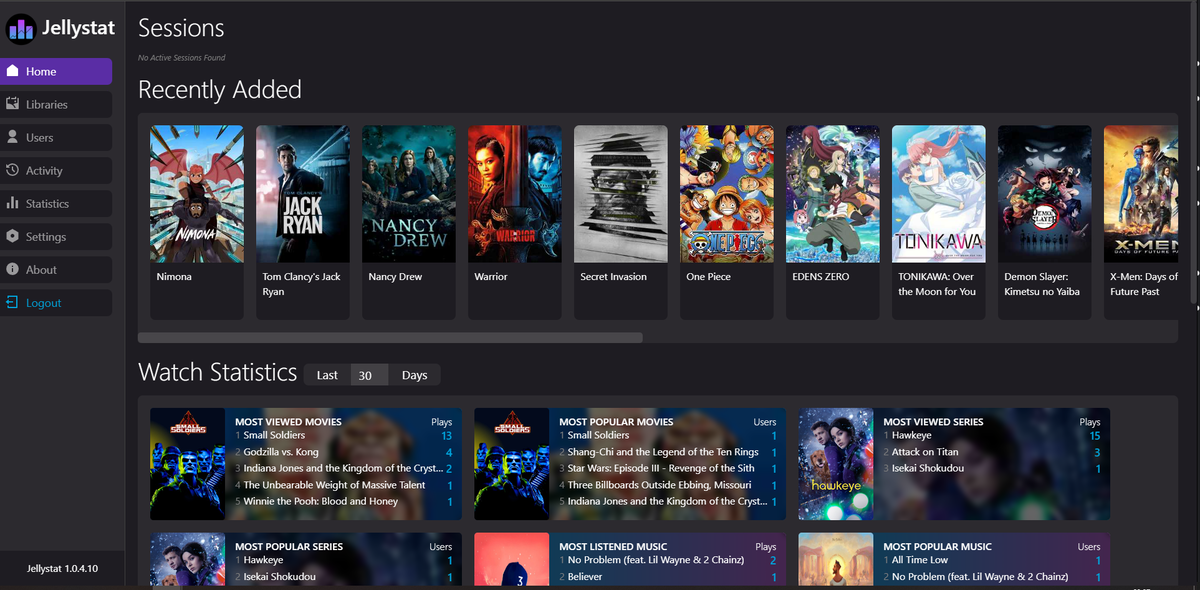
Without monitoring, problems appear only after users complain.
What You Should Monitor
- CPU usage
- RAM usage
- Active streams
- Transcoding sessions
- Error logs
- Plugin performance impact
This is where many servers fail silently.
9. Turning Jellyfin into a Premium Streaming Platform
A professional setup combines:
- Clean UI
- Automated collections
- Stable playback
- Smart plugin usage
- Active monitoring
When done correctly, your users won’t see it as "a home server" - they’ll see it as a premium streaming platform.
10. The Final Layer: Stability & Insight
Performance tuning is not a one-time action.
Serious administrators rely on continuous insight into their server health.
Monitoring helps you:
- Detect CPU spikes early
- Identify problematic plugins
- See real-time usage patterns
- Prevent downtime
- Optimize hardware investment
For administrators managing multiple users or large libraries, adding a dedicated monitoring layer provides long-term stability and confidence.
Final Thoughts
A powerful Jellyfin server in 2026 requires more than strong hardware.
It requires:
- Smart configuration
- Clean plugin strategy
- Proper transcoding setup
- Secure exposure
- Ongoing monitoring
When you combine all these elements, you create a streaming experience that rivals commercial platforms - while keeping full control over your media.
If you are serious about stability, scaling, and professional-grade performance, adding advanced monitoring to your Jellyfin stack is the logical next step.
Build it once. Monitor it continuously. Optimize it intelligently.
Add monitoring to your Jellyfin stack today. Download JellyWatch on Google Play - the Android companion app built for serious Jellyfin admins.


Comments 7
This is THE guide I wish I had when I started. Covers everything from hardware to monitoring. Saved me weeks of trial and error.
Built my server following this guide. Intel N100, 16GB RAM, running Docker. Family thinks we have Netflix. Mission accomplished.
Built my first server following this guide. Went from zero Linux experience to a fully working Jellyfin + Radarr + Sonarr stack in one afternoon. The Docker Compose approach makes it so approachable.
Started with 3 users, now at 12. The section on scaling strategies saved me when I hit the wall at 8 concurrent streams. Moving metadata to NVMe was the fix.
This is a great article and exactly what I was looking for as a Plex user looking to transition over to Jellyfin. Also, the comment about moving metadata over to NVMe makes so much sense I don't even know how I didn't think of that. lol it's most def probably the cause of a lot of my current issues.
A question I do have still having just thought of it as I'm writing this would be is there a way to export like your watch/watched stats and history type information from Plex over to Jellyfin? Assuming it has the same and/or plugins that add that functionality.
I shall go search that now, but figured I'd leave the remark here as well.
Hi, thanks for your message. It seems to me there's a script that can do this migration; a Google search should help you. If you'd like to share it later, I can update the article!
Having the time to do this now, I did google and found another article from JellyWatch here with the answer already ð https://jellywatch.app/blog/migrate-plex-to-jellyfin-guide-2026 describes how to use a community built "PlexToJellyfin" tool to automate watch history migration.
Leave a comment