
Jellyfin vs Emby in 2026: Which Self-Hosted Media Server Should You Choose?
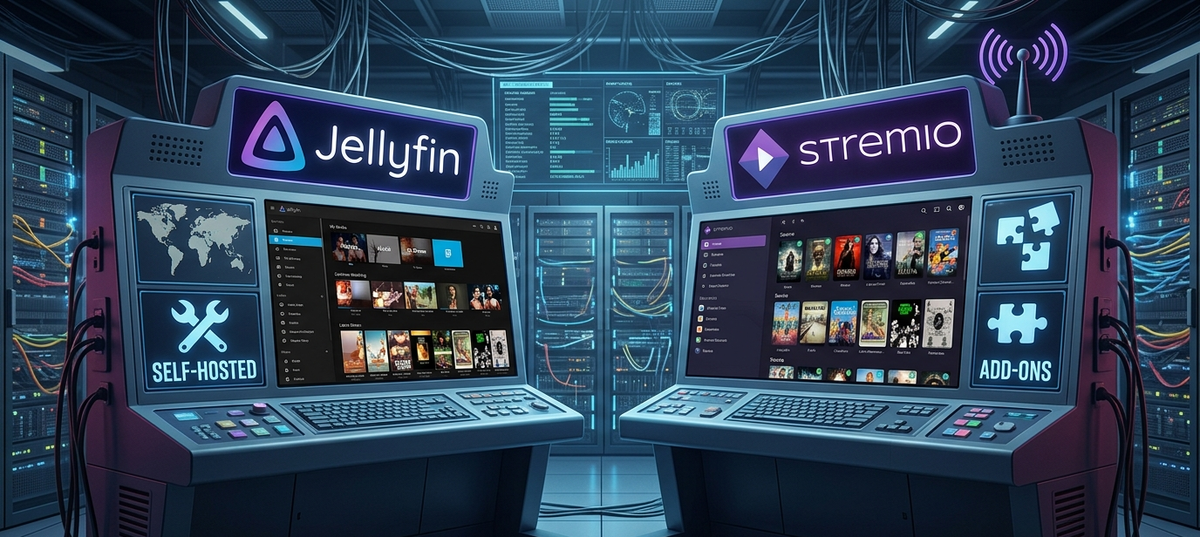
Jellyfin and Emby are both excellent self-hosted media servers - but they take fundamentally different approaches to features, pricing, and philosophy.
If you are deciding between them in 2026, this guide will give you a clear, honest answer based on your actual priorities.
Quick Comparison Table
| Feature | Jellyfin | Emby |
|---|---|---|
| License | Open source (GPL) | Proprietary |
| Price | 100% free | Free + Premiere required for key features |
| Account required | No | Yes |
| Hardware transcoding | Free | Emby Premiere required |
| Mobile apps (full) | Free | Premiere required |
| Plugin ecosystem | Community (GitHub) | Official + community |
| Live TV / DVR | Free | Premiere required |
| Android admin app | JellyWatch | EmbyWatch |
| Open source | Yes | No |
Pricing: The Biggest Difference
Jellyfin
Jellyfin is completely free - no tiers, no subscriptions, no "lite" version. Every feature including hardware transcoding, live TV, and mobile apps is available without paying anything.
Emby
Emby offers a free tier, but most features that matter for a real server require Emby Premiere:
- Hardware transcoding → Premiere required
- Full mobile app access → Premiere required
- Live TV and DVR → Premiere required
- Sync and offline download → Premiere required
- Backup and restore → Premiere required
Emby Premiere pricing in 2026:
| Plan | Price |
|---|---|
| Monthly | ~$4.99/month |
| Yearly | ~$54/year |
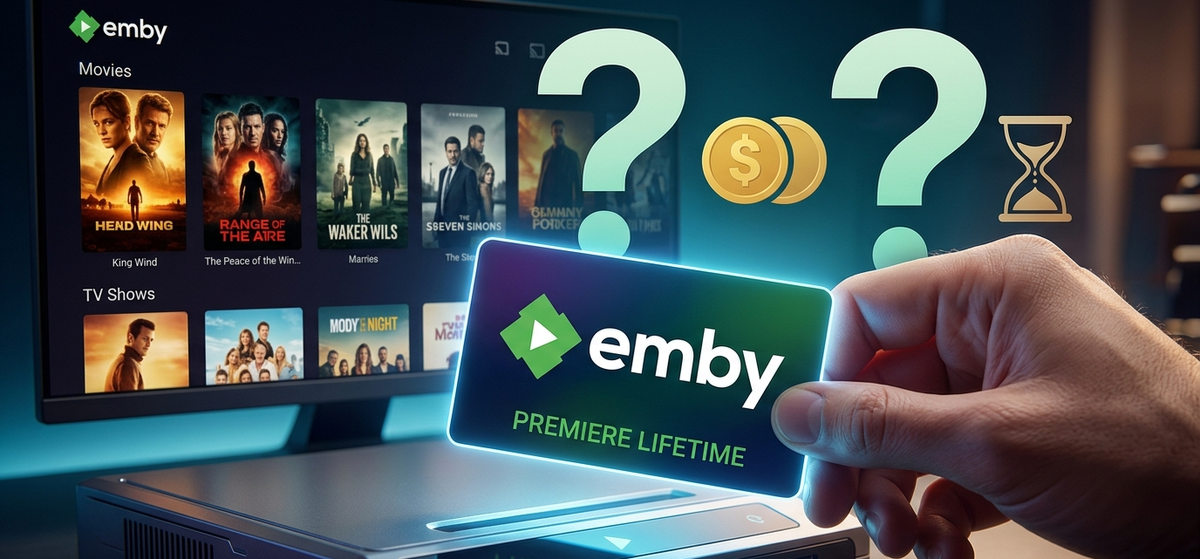
| Lifetime | ~$119 one-time |
For long-term self-hosters, the lifetime option is the most common choice. But unlike Jellyfin, you are paying for features that are entirely free on the competing platform.
Performance and Transcoding
Both servers perform similarly for direct play. The difference appears during transcoding.
Hardware acceleration
- Jellyfin: Intel QSV, NVIDIA NVENC, AMD AMF - all free, all fully supported
- Emby: Same hardware support, but requires Premiere license
4K HDR transcoding
Both handle 4K HDR transcoding with hardware acceleration enabled. Jellyfin has a slight edge in community-tested HDR tone mapping on Linux/Docker setups.
CPU usage at idle
Both servers are lightweight at idle. High CPU at idle is usually caused by background plugins or library scans - not the server itself.
Plugin Ecosystem
Jellyfin plugins
- Community-driven on GitHub
- More experimental / cutting-edge plugins
- Examples: Intro Skipper, Jellyscrub, Skin Manager, TMDB Box Sets
- Plugin catalog available directly in dashboard
Emby plugins
- Mix of official and community plugins
- More stable, less experimental
- Examples: Trakt sync, Auto Organize, OpenSubtitles, IPTV enhancements
- Plugin management from dashboard
Verdict: Jellyfin has a more active plugin community in 2026. Emby plugins tend to be more polished but fewer.
Mobile Apps
Jellyfin
- Official Jellyfin Android app: free, open source
- JellyWatch: dedicated Android admin app - session monitoring, server health, Radarr/Sonarr/Jellyseerr integration, watch history, push notifications
Emby
- Official Emby app: requires Premiere for full access
- EmbyWatch: dedicated Android admin app - same feature set as JellyWatch but built for Emby servers
Privacy
Jellyfin
- No account required
- No telemetry by default
- No cloud dependency
- 100% local - your data never leaves your network unless you configure remote access
Emby
- Account required (for activation and updates)
- Some telemetry
- Server activation checks against Emby's servers
- Metadata fetched from external providers (same as Jellyfin)
Verdict: Jellyfin wins on privacy. It is the only option if you want zero external dependency.
User Interface
Both interfaces are clean and modern in 2026.
- Jellyfin has a more community-driven UI with many available themes (JellyFlix, Monochrome, etc.)
- Emby has a slightly more polished default UI, consistent across platforms
With the Skin Manager plugin, Jellyfin can be made to look identical to any streaming platform.
Live TV and DVR
- Jellyfin: Full Live TV and DVR support - free
- Emby: Full Live TV and DVR support - Premiere required
Both support HDHomeRun tuners, IPTV playlists (M3U), and EPG guides.
Which Should You Choose?
Choose Jellyfin if:
- You want zero cost, forever
- Privacy is important and you want no external accounts
- You enjoy an active open-source community
- You want a wide plugin ecosystem
- You run Docker on Linux (best performance)
Choose Emby if:
- You prefer a more polished out-of-box experience
- You are willing to pay for a lifetime license
- You want official support and a more stable plugin ecosystem
- You are already invested in the Emby ecosystem
The Android Admin Apps
Whichever server you choose, managing it from your phone is essential for any serious self-hoster.
- Jellyfin users: JellyWatch on Google Play - real-time sessions, server monitoring, Radarr/Sonarr/Seerr integration, push notifications
- Emby users: EmbyWatch on Google Play - the same complete monitoring experience built for Emby
Both apps are built by the same team and share the same feature set, adapted to each server's API.
Already on Jellyfin? Download JellyWatch on Google Play - monitor your server, manage sessions, and control your entire homelab from Android.
On Emby? Download EmbyWatch on Google Play - the same complete monitoring experience, built for Emby.

Comments
No comments yet. Be the first to share your thoughts.
Leave a comment